
Sanur Protecting Coastal Resort – The community of Sanur has kicked back over proposals to construct a Floating Storage Re-gasification Unit (FSRU) Liquefied Natural Gas (LNG) Terminal in the waters around Sidakarya in South Denpasar, off the shore of the popular tourism hotspot.
Sanur is one of Bali’s most popular tourist resort areas and has undergone a huge redevelopment over the last five years.
Now known as the Sanur Special Economic Zone for Medical Tourism, Sanur is welcoming a new chapter of tourism development while working hard to maintain the community’s traditional way of life as a fishing village.
Local communities have raised concerns that plans to build a Floating Storage Regasification Unit (FSRU) Liquefied Natural Gas (LNG) Terminal in the waters around Sidakarya in South Denpasar.
The mega structure is planned to be built 3.5 kilometers off the coast of Sidakarya Beach and will be connected to the mainland via an underwater pipeline network. The mega-structures would not only be visible from the resort area of Sanur, but also by those making the crossing to the Nusa Islands, and across the Denpasar coast.
Many community leaders have come forward to reject the development. They have shared their fears that the project’s distance from the shore is too close and has the potential to cause social, cultural, and environmental impacts on coastal areas, particularly Sanur and Serangan. Both Sanur and Serangan are areas already popular with tourists and that have been identified as being priority areas for tourism promotion in the coming years.
Community leaders’ concerns are not unfounded. The proposed Floating Storage Regasification Unit (FSRU) Liquefied Natural Gas (LNG) Terminal off Sanur is set to be 3.5km from the shore. In comparison, existing FSRU projects in Indonesia are generally located much further from the land mass.
For example, the Jakarta Bay FSRU (2012) is located 15 km from the coast, the Lampung FSRU (2014) was developed 22 km from shore, and the Cilamaya FSRU in Karawang, West Java (2021) was built approximately 21 km from the coast. For context, generally speaking, from the shoreline, the horizon is approximately 4.7 km away.
Speaking to reporters, Ida Bagus Gede Sidharta Putra, who is the Chairman of the Indonesian Hotel and Restaurant Association (PHRI) Denpasar and Chairman of the Sanur Development Foundation, shared with reporters his firm opposition to the proposed project.

He shared his view that the construction of an LNG terminal in the Sanur-Sidakarya waters could threaten Bali’s tourism image, which relies heavily on its natural beauty and cultural charms as a draw for tourists.
Putra told reporters, “As a Sanur resident and tourism professional, I oppose the LNG terminal plan. There will definitely be social, cultural, environmental, and tourism impacts. Tourists come to Sanur for its natural beauty, beaches, and friendly locals. A refinery would be a thing of the past. What about marine pollution?”
He noted that Sanur’s tourism sector is thriving right now and that leaders should be mindful to avoid anything that may threaten that. “Sanur is doing well, with occupancy rates above 80 percent. It would be a shame to ruin it, especially since we’re promoting wellness tourism. The end of the year usually gets busy from the 20th to mid-January.”
Sanur is settling into its new chapter as a Special Economic Zone for Medical Tourism, with the opening of the Bali International Hospital and other medical facilities in the area proving a success so far. Tourism leaders in Sanur now want to build upon this new foundation and create space for even more tourism niches to thrive in the area.
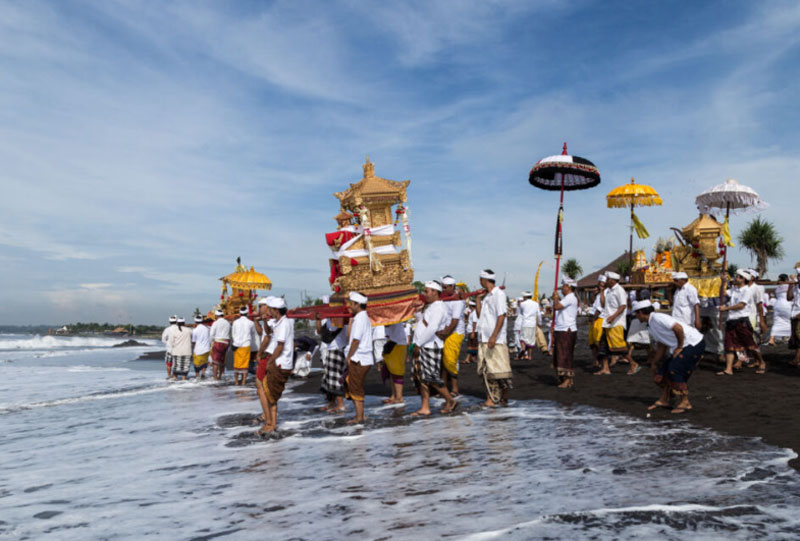
He added that Sanur is more than a tourism destination, and that the coastline and the surrounding waters should not only be preserved for the sake of tourism, but also for the local community too. The coastline around Sanur is of huge spiritual significance for Balinese Hindus. Putra explained, “Sanur Beach is used for many activities, including religious ceremonies, local recreation, and international tourist activities.”
Speaking to reporters last week, the Director of Marketing Communications for The Meru Hotel in Sanur, Melody Siagian, shared, “Our role is to support the Sanur Health Special Economic Zone. As a property located here, we want to bring better equality tourists to Bali.”
Main Article: Sanur Protecting Coastal Resort
Bali Urged To Protect Green Landscapes
Bali is urged to renew its commitment to protecting green landscapes and the island’s cultural heritage. The calls come from respected tourism professor Dr. I Wayan Suardana, SST.Par., M.Par., from Udayana University in Denpasar.
The lecturer is urgently calling for leaders to protect Bali’s forest and upstream landscapes as development in coastal regions booms.
Speaking to reporters, Dr. I Wayan Suardana, who is the Dean of the Faculty of Tourism at Udayana University, stated that the provincial government’s role in maintaining ecosystem balance and tourism needs is not functioning as well as it could. He noted that investor interests are dominating over the need to protect and conserve the natural landscape. Dr Suardana shared, “It’s truly unfortunate that Bali’s tourism sector is experiencing extraordinary degradation, driven by traffic jams, waste, and the exploitation of forests and lakes.”
He also criticized both the central and provincial governments for not working coherently to ensure the success of major projects and uphold the regulations in place to protect the environment. This, he feels, is leading to unregulated tourism development across the island, which threatens both the landscape and local community wellbeing.
Dr Suardana shared, “The synchronization is not clearly visible, and overlapping and waiting between the central and regional governments are the main factors that hinder evaluation and oversight, which should be carried out periodically.”
Dr Suardana called for the Bali Provincial Government to take firm action against those found to be violating building permits and business operation licenses. He explained, “If any individuals are involved, they must be cleared.
The government must be firm and impartial. Bali is small, and it must be well-preserved because its tourism potential lies solely in its uniqueness and natural balance.”
In his observation, Dr Suardana feels that poor monitoring and supervision of permits and licenses have resulted in development and investment becoming unregulated. He noted, “Supervision isn’t working. Currently, the government only reacts when cases become public on social media.”
Main Article: Sanur Protecting Coastal Resort

His calls are clear: “Bali doesn’t need to clear forests for tourism. True ecotourism utilizes forests without damaging the ecology. Ecotourism should protect forests, not exploit them.”
He wants to see the Bali Provincial Government seriously investing more time, effort, and resources into developing genuinely sustainable tourism initiatives and stricter conservation plans for green areas yet to be touched by tourism.
Dr Suardana concluded, “Tourism should support conservation activities, not use it as a tool for destruction.” Adding “Especially in terms of physical development and permits. The government must be bold and assertive to maintain Bali’s sustainability.”
Bali Governor Wayan Koster has already drafted legislation that will see a ban on the development of new tourism infrastructure in many areas of the island starting in 2026.
However, this policy is only drafted and not yet brought into effect, and does not cover the most popular areas for development, such as Badung Regency, home to resort areas such as Uluwatu, Canggu, Seminyak, Legian, and Kuta.
This was confirmed back in July 2025 when Governor Koster stated that the six regency leaders who had endorsed this step were from Tabanan, Jembrana, Buleleng, Bangli, Karangasem, and Klungkung.
Dr Suardana’s calls must be listened to if Bali is to be able to hit its targets of being a sustainable tourism destination and for leaders to keep their election promises. His warnings must also be heeded, even in more general terms, too.
Earlier this month, the Indonesian Ministry of Tourism announced that it will be promoting three specific areas of travel focus to tourists moving forward. This is the promotion of gastronomy, wellness, and maritime tourism across Bali and across the country. All three of these key tourism focus areas rely upon a healthy and thriving set of ecosystems across Bali.
Main Article: Sanur Protecting Coastal Resort
Looking for a beautiful Residential Property in North Bali?
Please contact us for more information on Sanur Property